jueves, 5 de noviembre de 2020

Presentación sobre México

 Respuestas

1- una gran ciudad, volcanes, 
nubes, edificios, esmog, un ala del avión. 

a big city, volcanoes,
clouds, buildings, smog, a wing of the plane.

2.

Las siguientes imágenes:

- Los mariachis
-Una pirámide maya
- El altar de muertos
- Frida kahlo y su esposo
- Un mural
-Guacamole
- Tacos de carne
- Enchiladas

martes, 3 de noviembre de 2020

4ta clase vocabulario


Dime, ?has practicado tu español esta semana?

Tienes palabras nuevas en tu vocabulario?


Hoy vamos a aprender a presentarnos


Vocabulario sobre familia


Mira este video

https://www.youtube.com/watch?v=Bj-fAlHK2rM


3 preguntas en pasado, sobre cena y familia - Nivel Principiante

1 Vamos a empezar haciendonos preguntas. (We going to start doing questions each other.)

Instrucciones 
Lee - read
Tú lees los diálogos de Michael y yo los diálogos de Ana.-You read Michael's dialogues and I read Ana's dialogues


En seguida contesta las preguntas después de cada párrafo. 
Then answer the question after every paragraph. 

1.
MICHAEL- hola Ana ¿qué tal? -hi Ana how are you?
ANA - hola Michael, todo bien, gracias ¿y tú?
Michael - muy bien, gracias. 
-very well thanks


2. The next paragraph have a question using the verb in past. 

Ana - ¿Trabajaste mucho hoy? - Did you work a lot today?
Michael - - - - -  sí / no trabajé mucho. Y tú? 
Yes / not... I didn't work much. And you? 
Ana -sí, también trabajé mucho. Yes, i worked too a lot. 
/ no, tampoco trabajé mucho. I neither worked a lot. 


3A  El verbo cenar in past. To dinner. 
(it's sure you going to be a little confuse about verbs in past but try just memorise this way to say this sentences and then you going to search about regulars verbs in past) 

 ANA- ¿Ya cenaste ? 
Have you already had dinner?
MICHAEL - Sí, ya cené, gracias. /
No, no he cenado aún.    

Yes, I already had dinner, thank you.  /
 No, I haven't had dinner yet.

ANA -  ¿y qué cenaste? 
What did you have for dinner?
Michael - answer  .... Y tú? 
ANA - yo cené un tamal y un té con gengibre. ¿Te gusta el gengibre? 
I had a tamal for dinner and a tea with ginger.  Do you like ginger?
Michael - ¿qué es un tamal? 

B.
Hablemos sobre la familia.
Let's talk about family.

Responde mis preguntas.
Answer my questions.

1 ANA -¿cómo se llama tu mamá? 
What is your mom's name?
Remember verbo Llamarse 

Michael - Mi mamá....... 
¿Y la tuya? 
And yours? 

2. ANA - ¿Cómo se llama y cuantos años tiene tu papá? 
What is your dad's name and how old is your dad?

MICHAEL - MI Papá se........ 

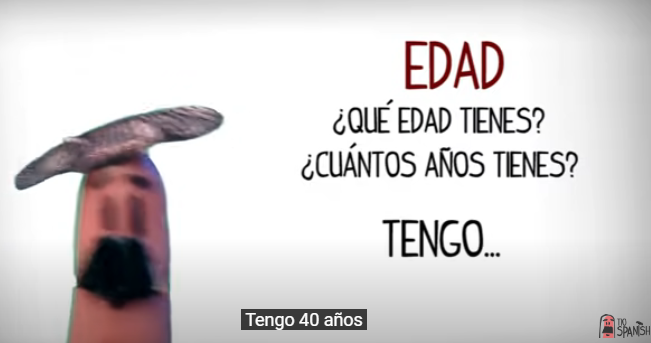
Now see all the vocabulary about family and do more questions for ana. Using the verb to have tener. 
Yo tengo
Tú Tienes 
Él tiene
viernes, 23 de octubre de 2020

Verbos REGULARES en español - Nivel PRINCIPIANTE


El verbo ESTUDIAR It's a regular verb that finish in AR


For homework you can choose between looking vocabulary about the family or about things you like. 


About the verbs in Spanish :


martes, 20 de octubre de 2020

1 Primera clase en Español - Nivel principiante

Hola Bienvenido a tu primera clase de español con Ana. 

¿Cómo estás? 

Acerca de mi. (About myself) :

Me llamo Ana Lucía 
Mis apellidos son Ruiz Bermúdez 

Yo vengo de México. Nací en Chiapas y ahora me encuentro en León Guanajuanto. ¿Puedes encontrarlos en el mapa? 


1. Los pronombres en español. 

Pronouns in Spanish are a little more complex than in English. Do you know why? 


And because when you make a complete sentence you have to conjugate each verb according to the subject, that means, according to the pronoun you use.

The different conjugations of the verbs is the most difficult in Spanish, but it is not so bad.  We will learn little by little with topics of your interest.  I personalize my classes for each different student.

The other challenge that you will do in Spanish is that you will understand that in Spanish we use more prepositions than in English.  In that sense English is simpler.  But good news: the pronunciation of Spanish is easier than other languages ​​like English, French or German, you just have to remember that in Spanish we pronounce each letter, (Consonant and vowel) 

The other good news is that in my classes we do not study grammar, we will study topics related to culture and other interests, and we will only use grammar a little to answer questions.  For me, the best way to learn is with the interest of speaking, and constant correction.


some vocabulary :
-Sí 
-por favor
-tal vez (maybe) 
-a veces (sometimes) 
-descansar (to rest) 


VERBOS :

- estar - to be :
        Yo estoy - yo estoy feliz (I'm happy)
        Tú estás -  you are.      - ¿cómo estás? 
         Ella está. - she is.

- hacer
         Yo hago -
          Tú haces
           Ella hace

- comer
        Yo como
         Tú comes
         Ella come

- hablar. - speak
           Yo hablo. - I speak
           Tú hablas
           Él habla

- querer - - - - want
      Yo quiero - I want 
      Tú quieres - you want 
      Ella quiere - 

-gustar (this is a little different verb because we need to add one other word, a Reflexive pronoun) so,

       - me gusta. (I like)
       - te gusta comer (you like to eat) the "tú" is implicit in the "te" 
      - le gusta comer

 the verb "llamarse"   - "me llamo Michael" 

         Me llamo Michael (I) - my name is.. 
         Te llamas Ana   (you) - your name is.. 
         Se llama Marcela (she) - her name is (But it is not literal.  Because it would literally be "called")

Ask me questions in Spanish using this vocabulary or more. 
¡Vamos! - let's go!

-
-
-
-


lunes, 7 de septiembre de 2020

Clase sobre Borges - Nivel Intermedio


_____________________________________________________

https://www.youtube.com/watch?v=yU1CgAjxIlI


Borges temia a los espejos?


A quien decía Borges que debía su conocimiento?

A Su amplia biblioteca y A sus colegas


Jorge francisco Isidoro Luis Borges

Argentina 24 de agosto de 1899


quienes le transmitieron un profundo amor a las letras?


A que edad ya se visualizaba como escritor?

6


Que dice Borges sobre la amistad


La amistad no necesita frecuencia, puede presindir de la frecuencia, el amor no.


Buscar un


Cuales Tópicos característicos del universo de Borges

Temas recurrentes : Los laberintos, los espejos y el tiempo.


¿De que se enorgullecía Borges?

Español clase - Nivel Intermedio en el instituto


https://www.youtube.com/watch?v=GyorkfI1sXQ 


https://www.youtube.com/watch?v=hRhWGPa2c5o